Sunday, September 9, 2012

FLASHBACK -- Day 7 FLORIDA - Give Kids the World Resort / Atlantic Ocean

Sunday, September 11, 2011Today we thought we would head over to Give Kids the World resort that we stayed at last year on Ollie's Make*A*Wish trip in April 2010. Since Jaren didn't go with us last year, we thought we would show him around and get some ice cream at the ice cream shop! It was one of the best places we visited and we were happy that they welcomed us back for the morning. Thank you to all the volunteers who so freely and lovingly give their time down there for our families to make memories.


Ollie helping Jaren play a little video game while we were in the main office getting name tags.


Amberville train station and the main office building


Mayor Clayton mosaic


Henri Landwirth the wonderful man who came up with the idea of the resort for Make*A*Wish kids and their families.

Some of the cute designs of the houses we stayed in last year.


Old Elmer


Mayor Clayton's house


The Ice Cream Palace - where we stopped in for some ice cream.  This is where we got the inspiration to start our ice cream for breakfast tradition on the first day of school.


The Castle of Miracles

Ollie's star is on the wall near the center of the photo.  It really takes your breath away to see so many stars.  They added another part since we were there for his Make*A*Wish trip.


The Star Tower is new since last year.


Eden getting close to being pushed into the fountain!


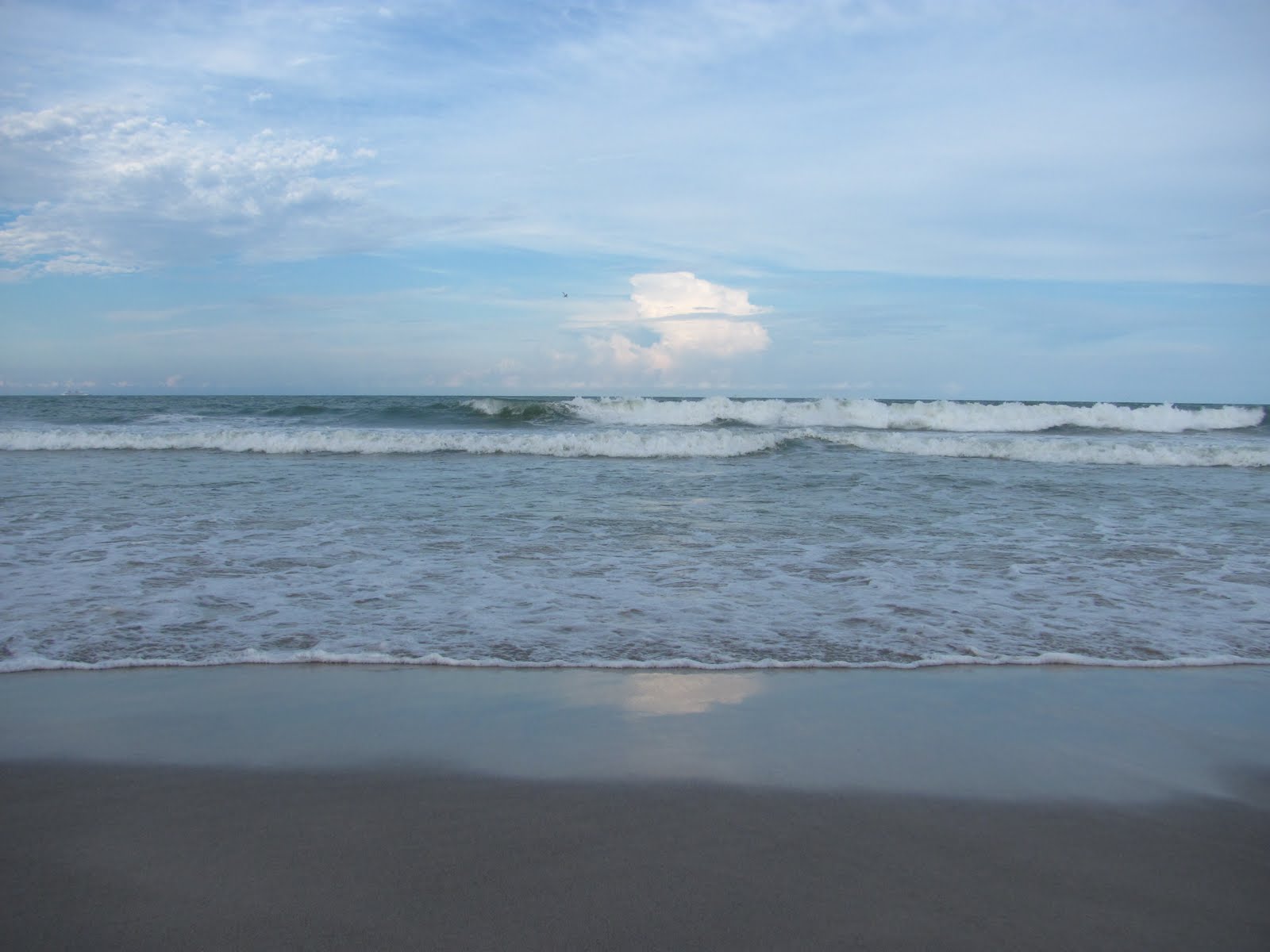
Today was the first time any of us (Me, Ed or the kids) had seen the Atlantic Ocean. We weren't able to come last year on Ollie's Make*A*Wish trip because Ollie had such bad motion sickness that we didn't want to make the drive and make him miserable. We traveled down to Melbourne, where my two cousins live and they drove us to the beach. I was so excited to go to finally see the ocean! I don't think Ollie wanted to go at first, but the being the mean mom I am, I made him go and knew he'd like it once he got there. We got there in the late afternoon and stayed until sunset when a storm was starting to roll in.


Ed and Oliver walking to the beach.


First steps in the ocean...


What a view!


Interesting jellyfish on the beach. Evidently Oliver was sitting near one and accidentally rolled over onto one. No harm done. Whew!


Building a sandcastle with Jaren and Uncle Chad.


I LOVE this picture of Ollie and Bear.


Beauty and the beach...


Grandma and Ollie


Ed and my cousin, Talen.


Gorgeous sunset.


I thought this was so odd how the clouds made such a stark contrast in the sky. 

We went to a restaurant, Grills Seafood Deck and Tiki Bar, that had a great view of the ocean.  We got to spend a little more time with my cousins, Brett and Talen which was nice.


My older brothers, Bryan and Chad

While we were eating dessert, Oliver was eating some chocolate cake and started to complain of his stomach hurting and then his throat getting itchy.  Ed took him to the bathroom and he came out a few minutes later with his shirt off, COVERED in hives.  He was red and blotchy and said they just itched horribly.  We knew we had to get to the ER as quickly as we could.  We followed my cousins and sped to the nearest hospital, checking on Oliver constantly, asking him how his breathing was and how his throat felt.  We got to the ER and I freaked out even more because of how much the nurse was panicking.  We gave him his Epi Pen for the first time and realized we should have given it to him MUCH sooner.  I was realllllllly scared at this point.  The nurse was running around yelling at everyone in such a panic that it really was freaking me out.  By the time we got into the room his hives were SO BAD they were raised and morphing into one HUGE hive on his back.  I mean his ENTIRE back was COVERED in a raised area of skin.  His chest, his arms, legs, neck, face was all blotchy and covered in hives.  His ears... all over his ears was swollen, even in the upper part where you wouldn't think it could even become swollen was as large and thick as his ear lobe.  It was SO SCARY.  The pictures were taken to show our doctor when we got back home how bad it was, but they were taken when things started to get better so you can't see how bad it was in the beginning.  Yeah... allergic reactions are NOT something to mess around with.  I think it may have been cross contamination with a pecan or some other nut.  I tried emailing and phoning the restaurant to get an ingredient list of the items he ate so I could figure out what exactly to have him tested for, but they never got back to me... nice, huh?

My sweet boy...


After a long night in the ER, driving back to the hotel to get some sleep before heading back home the next morning.  What a way to end our trip.

Thursday, September 6, 2012

SEPTEMBER is CHILDHOOD CANCER AWARENESS Month!!!


This month is all about spreading MUCH NEEDED awareness for children with cancer.  I saw something on facebook that said...


"So you wanna know why if your kid doesn't have cancer I'd ask you to spread awareness???  Well, at one point my kid didn't have it either!!!"

Nothing will change unless we look the problem in the eye and challenge the powers that be.  Like Dr. Phil says, "You can't change what you don't acknowledge."  Exactly.  Nothing will change if we don't see that there is a problem.  It is a problem when federal funding is so low.  Nearly 4% of funding goes toward pediatric cancer and pediatric cancer isn't just ONE cancer.  There are 12 main types and then many subtypes of each of those.  The majority of the federal funding goes toward breast cancer research.  Just ONE TYPE of adult cancer.  These kids need a fighting chance.  They need their fair share of funding.  These kids are dying before their lives even start.  My son died at age 10.  He could have had a good 70 years left of his life. 

"Curing childhood cancer is the equivalent of curing breast cancer in terms of productive life years saved" ~ Dr. Eugenie Kleinerman - Head, Division of Pediatrics, M. D. Anderson Cancer Center.  

We NEED to be the voice for these kids!  We as parents are passionate about finding a cure for children's cancer even AFTER our own children have passed away from it.  We know all too well what it is like to hear the news that your child has cancer and then some of us get to hear the news that there really is nothing we can do to help save them.  WHAT???  Just go home and wait for my kid to die??  SERIOUSLY???  Yeah... we are angry.  We are hungry for something to be done!  It may be too late for OUR child, but it's not too late for YOUR child... or your grandchild, niece, nephew, friend.  NO ONE is immune from getting cancer.  It used to be rare, but over the years it is getting more and more common, touching kids from every race and socioecomomic background.  You may feel immune when you look away from the problem, but when it strikes... it strikes hard.  Nothing will change if people continue to say "Oh that's so sad.  I don't know what I would do if that happened to MY child."  Well... it CAN happen to YOUR child.  You CAN do something!  Continue to talk about it, raise money for research, inquire after what amount of funds are going to children's cancer research and challenge them to put more toward the children, ask why there are no gold ribbons in the stores, on the boxes in the grocery aisle.  The kids need to have their voice heard or they will just continue to die.  It makes me sick just thinking about it.  Contact your local representatives and ask what they are doing with regards to childhood cancer research.  There are so many ways to raise awareness and do something about it.  Anything is better than just turning away from the problem and counting YOUR blessing.  Reach out and DO something in honor of the kids that have passed or are still fighting.  You CAN do SOMETHING!!!  Our kids deserve better than 4%...


Become aware...
 The following is taken from St. Baldrick's Foundation...

"TYPES OF CHILDHOOD CANCER...

Acute Lymphoblastic Leukemia is the most common type of childhood cancer. It is a cancer of the blood system, starting in the bone marrow and percolating out into the blood. These patients have too many immature white blood cells in their blood and bone marrow. Fully developed lymphocytes fight infection by attacking germs and other harmful bacteria in the body, wherea

s lymphoblasts are harmful.

Central Nervous System (CNS) tumors are cancers of the brain and brain stem. They are the most common solid tumors of childhood and they have the highest mortality rate of the childhood cancers. Types include medulloblastoma, PNET, germ cell tumors, high-grade and low-grade gliomas, ependymoma, astrocytoma and more. (DIPG - Diffuse Intrinsic Pontine GLIOMA)

Clear cell sarcoma of the kidney (CCSK) is a very rare type of kidney tumor. It is not recognizable as different from Wilms tumor before removal of the tumor, but requires a different treatment.

Ewing Sarcoma is a less common form of bone tumor, affecting mostly children ages five and older. These tumors form in the cavity of the bone.

Hodgkin disease is a type of lymphoma, a cancer of the lymph nodes. It affects teens most commonly, but also younger children. The lymph system is present throughout the body and helps fight infections. Hodgkin disease can start almost anywhere and then spread to almost any organ or tissue, including the liver, bone marrow and spleen.

Myeloid leukemias are more rare and difficult to cure than the more common Acute Lymphoblastic Leukemia (ALL). In leukemia, the bone marrow produces large numbers of abnormal blood cells which flood the bloodstream and lymph system and may invade vital organs. The most common cancer of the myeloid cells is Acute Myeloid Leukemia (AML). Others include Juvenile Myelomonocytic Leukemia (JMML), Chronic Myelogenous Leukemia (CML), Acute Promyelocytic Leukemia (APL), and Myelodysplastic Syndromes (MDS). While adults are much more likely to get AML than children, treatment for children with AML is different from that of adults.

Neuroblastoma is a cancer of the sympathetic nervous system, a nerve network outside the brain. Neuroblastoma tumors can grow in the abdomen, neck or pelvis. The average age of diagnosis is 2, and it is rare in children over 10 years old.

Non-Hodgkins Lymphomas are cancers of the cells of the immune system (T and B lymphocytes, natural killer cells). Cells of the immune system are produced in the bone marrow and then travel to all the lymph glands, the thymus gland, areas of the intestinal tract, tonsils, and spleen, so a lymphoma can develop in any of those sites. The four major subtypes of NHL in children are Lymphoblastic, Burkitts, Large B cell, and Anaplastic large cell.

Osteogenic sarcoma (or osteosarcoma) is the most frequently diagnosed type of bone tumor, usually found in adolescents and young adults. Tumors are most often in the large bones of the upper arm (humerus) and the leg (femur and tibia).

Retinoblastoma is a cancer of the retinoblasts, or "baby" cells in the retina, responsible for vision. Retinoblastoma occurs most often in children from birth to age 3. About 40% of these children have the genetic form of the disease; with every cell in the retina susceptible to tumor formation, usually both eyes are affected. The other 60% have the non-genetic type, affecting only one eye. Since removal of the eye can cure most children research is now focused on preserving vision.

Rhabdoid tumor of the kidney is a very rare type of kidney tumor, and rhabdoid tumors can occur in other places of the body, as well. Researchers have found a specific gene mutation that leads to rhabdoid tumors.

Soft tissue sarcomas can be found anywhere in the body. Rhabdomyosarcoma is a tumor that arises in the muscle cells, and is the most common type in children under age ten. The other soft tissue tumors are more rare and tend to be found in adolescents. They include fibrosarcomas, synovial sarcomas, malignantperipheral nerve tumors, leiomyosarcoma, liposarcoma, and others even more rare. Some soft tissue tumors are similar to those found in adults, while others are very unique to children.

Wilms Tumor accounts for about 90% of kidney tumors in children. About 95% of children with this tumor have a "favorable histology" (better cure rate with less treatment) as determined by the pattern the pathologist sees in the tumor cells. The other 5% have anaplastic Wilms tumor, which is much more resistant to treatment.

Other Rare Childhood Cancers There are many types that are so rare it is difficult to do research on them. However, "rare" is a relative term, as these account for about 15% of childhood cancers, jumping to 30% if adolescents are included. Rare childhood cancers include germ cell tumors, liver tumors (hepatoblastoma and hepatocellular carcinoma), adrenocortoco carcinoma, colon cancer, melanoma, nasalpharangyal cancer, thyroid tumors and others."